

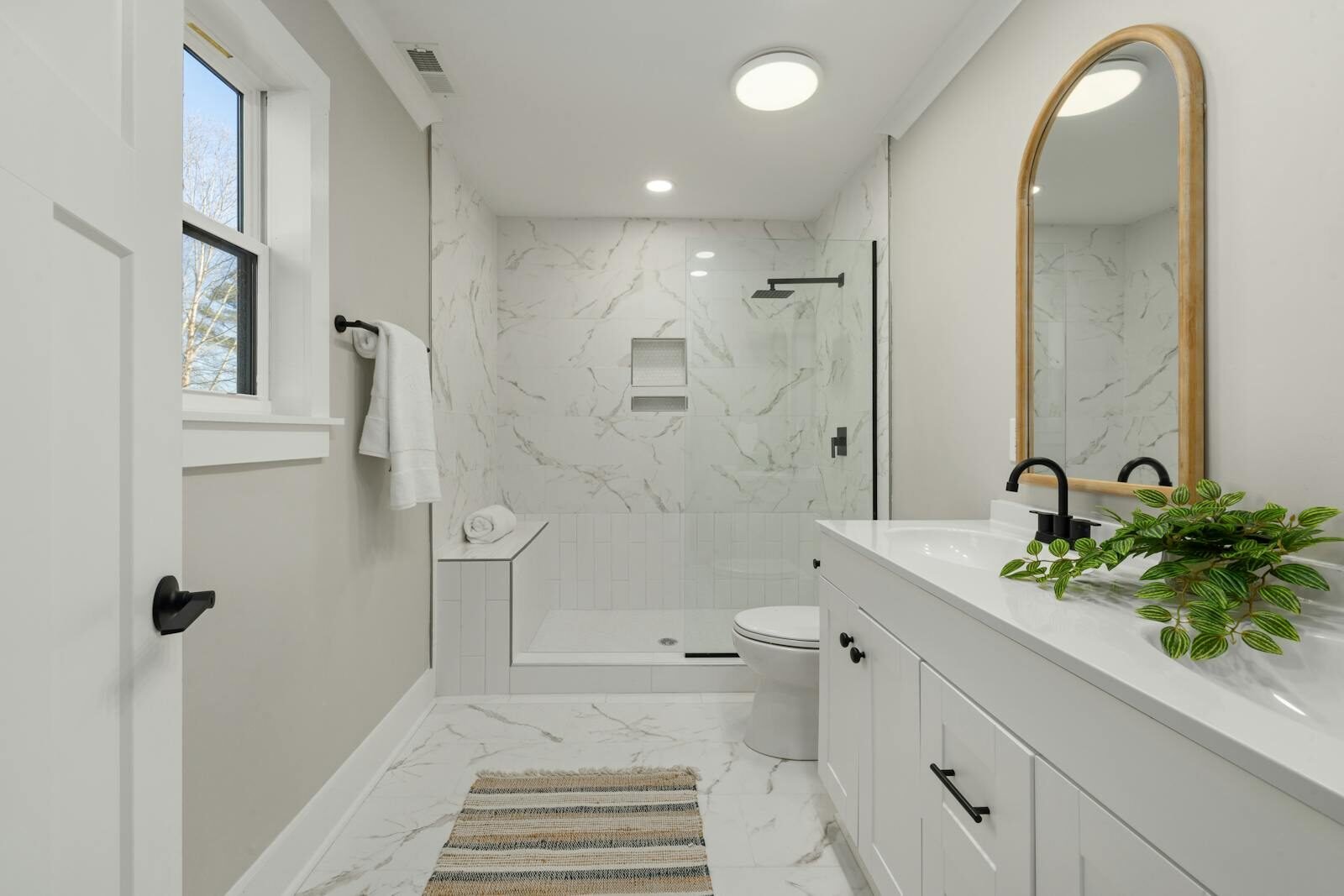
If you have been staring at the same outdated tile since the early 2000s or cringing every time you walk into a bathroom that feels more like a storage closet than a retreat, you are not alone. Bathroom remodeling is consistently one of the top home improvement projects across the United States — and for good reason. A well-executed bathroom renovation can increase your home’s resale value, improve daily quality of life, and genuinely make your mornings feel less like a chore.
The good news? You do not need a six-figure budget or a complete gut renovation to make a dramatic difference. Whether you are working with a modest powder room in a Chicago townhome or a sprawling master bath in a Phoenix ranch-style house, there are remodel ideas here that will inspire you, work for your space, and respect your budget.
Let’s get into it.
1. Go All-In on a Walk-In Shower
If there is one upgrade that consistently delivers the biggest visual impact, it is replacing a dated tub-and-shower combo with a spacious walk-in shower. Open, curbless showers have dominated design trends for the past several years, and in 2026 they are more accessible and more affordable than ever to install.
Large-format porcelain tiles (think 24×48 inches), a frameless glass enclosure, and a rainfall showerhead create that hotel-spa feel at home. For U.S. homeowners in humid climates like Florida or the Pacific Northwest, a curbless design also improves drainage and reduces mold risk — a practical win on top of a beautiful one.
Actionable tip: If you are replacing a tub, check first whether your home has young children or elderly residents. In some cases, keeping at least one bathtub in the home is worth preserving for resale purposes, especially in family-oriented suburbs in markets like Dallas, Denver, or Raleigh.
2. Install Heated Floors
Nothing transforms a bathroom experience faster than stepping onto a warm floor on a cold January morning. Radiant floor heating has become significantly more affordable in recent years, and electric mat systems are particularly DIY-friendly if you are comfortable with basic electrical work (or have a trusted electrician on speed dial).
Tile and stone floors are the best conductors for radiant heat, which works out perfectly since both are also top bathroom flooring choices for durability and aesthetics. Homes in northern states — Minnesota, Wisconsin, Illinois, New York — see some of the highest adoption rates of in-floor heating, but this upgrade adds value anywhere.
Actionable tip: Pair heated floors with a programmable thermostat so the floor warms up before your alarm goes off. Most systems can be controlled via smartphone apps today.
3. Rethink Your Vanity
A vanity refresh might be the single highest-return, lowest-effort bathroom remodel idea on this list. Replacing an old builder-grade vanity with a floating or furniture-style one immediately modernizes the entire room.
In 2026, popular vanity choices lean toward warm wood tones (white oak and walnut are having a serious moment), double sinks in primary bathrooms, and integrated storage solutions that hide clutter. Matte black and brushed gold hardware pairings remain strong, while unlacquered brass has entered the mainstream as a warmer, more lived-in alternative.
Actionable tip: If a full replacement is not in the budget, consider a cabinet painting and hardware swap instead. A can of Benjamin Moore Advance paint in a deep navy or forest green paired with new brass pulls can make a stock vanity look completely custom.
4. Add a Statement Mirror
Mirrors are doing heavy lifting in bathroom design right now — and they should be, since they bounce light, make small spaces feel larger, and serve as an anchor piece for the whole room.
Oversized arched mirrors, backlit LED mirrors, and vintage-inspired mirrors with ornate frames are all trending. For smaller bathrooms common in older East Coast homes and urban apartments, a full-wall mirror can essentially double the perceived square footage.
Actionable tip: LED smart mirrors that include built-in lighting, anti-fog technology, and even Bluetooth speakers are now widely available at price points starting around $200. They are a sleek, functional upgrade that pays for itself in daily convenience.
5. Upgrade Your Lighting
Lighting is almost always an afterthought in bathroom renovations, and almost always the reason a beautiful remodel still feels flat. Good bathroom lighting requires multiple layers: ambient overhead light, task lighting at the mirror level, and accent lighting if you want that extra polish.
Sconces flanking the mirror (rather than a single overhead bar above it) eliminate the shadows that make applying makeup or shaving so frustrating. Dimmer switches let you dial down the intensity for a relaxing evening bath. And for bathrooms with little or no natural light — a common issue in interior bathrooms in apartment buildings across New York, Chicago, and San Francisco — the right lighting strategy can make all the difference.
Actionable tip: Look for bulbs and fixtures with a CRI (Color Rendering Index) of 90 or above. High CRI means colors look truer, which matters for grooming and makes the whole room feel more vibrant.
6. Retile with Large-Format or Patterned Tile
Tile choices define a bathroom’s personality more than almost any other design decision. In 2026, two opposing trends are thriving simultaneously — and both look incredible.
The first is large-format, seamless tile (24×48 or even 48×48 slabs) that creates a clean, minimalist aesthetic with fewer grout lines. The second is bold, patterned floor tile — Moroccan-inspired cement tile, maximalist encaustic designs, and retro checkerboard patterns are all seeing a major revival. Both can work beautifully; it just depends on whether your bathroom personality leans toward “serene” or “expressive.”
Actionable tip: If you go bold on the floor, keep the walls simple. If you want a statement wall, let the floor be a grounding neutral. Layering two bold tile patterns in a small space almost never ends well.
7. Create a Spa-Style Soaking Tub Nook
For homeowners who still love a bath, the standalone freestanding soaking tub has become the centerpiece of luxury primary bathrooms. Oval matte stone resin tubs positioned under a window or in a dedicated nook are an incredibly aspirational look — and they are not reserved for mansion-level budgets.
Quality freestanding tubs are now widely available from $600 to $3,000 depending on material, with acrylic options offering a lighter-weight, easier-to-install alternative to cast iron or stone.
Actionable tip: Before buying a freestanding tub, verify your bathroom floor can support the weight when filled (water is heavy — a full 60-gallon tub plus the tub itself can exceed 700 pounds). Check this with a contractor if your bathroom is above the first floor.
8. Maximize Storage with Recessed Shelving
One of the most underused bathroom remodel ideas is the recessed niche — a shelving alcove built directly into the wall cavity between studs. They add storage without consuming any floor space, create a built-in look that buyers and renters love, and are genuinely one of the most satisfying DIY projects for those comfortable with basic framing and drywall work.
A recessed niche in the shower for shampoo and soap, a recessed medicine cabinet, and a recessed toilet paper holder can collectively eliminate almost all of the clutter that makes small bathrooms feel chaotic.
Actionable tip: Make sure recessed niches are installed between studs (typically 14.5 inches wide in standard framing) and on non-exterior, non-load-bearing walls. Avoid plumbing walls unless your contractor confirms it is safe.
9. Swap Your Toilet for a Modern Upgrade
The toilet is not glamorous, but it is in the center of your bathroom and your guests notice it. In 2026, smart toilets and comfort-height, rimless designs have moved firmly into the mainstream.
Comfort height (17–19 inches, versus the standard 15 inches) is notably easier on knees and backs, which is important for aging homeowners and frankly just more comfortable for most adults. Dual-flush options save water — a consideration that is both eco-conscious and financially smart given rising utility costs across Sun Belt states like Arizona, Nevada, and Texas.
Actionable tip: Bidet toilet seats are now widely available in the U.S. for $30 to $600 and represent one of the most impactful bathroom upgrades per dollar spent. Many users report never wanting to go back.
10. Bring in Natural Elements
Biophilic design — incorporating natural materials and textures — has moved from interior design trend to mainstream bathroom staple. Live edge wood accents, natural stone countertops, bamboo accessories, and even potted plants that thrive in humidity (like pothos, peace lilies, or Boston ferns) all contribute to a bathroom that feels calming and organic rather than cold and clinical.
Actionable tip: If live plants feel like too much maintenance, incorporate natural materials in permanent fixtures: a teak shower bench, a rattan basket for extra towels, or a honed marble countertop will give you that organic warmth without the watering schedule.
11. Install Smart Shower Technology
Smart showers are no longer just for tech enthusiasts. Systems like U by Moen and Kohler’s digital shower allow you to preset your ideal water temperature, duration, and flow from a smartphone app or a digital panel on the wall. You can start your shower from bed and step in when it is already at exactly 104°F.
These systems also help with water conservation — a priority in drought-prone regions of California, Colorado, and the Southwest — by reducing the time you run water waiting for it to warm up.
Actionable tip: Smart shower systems typically run from $500 to $2,500+ depending on features and number of outlets. Installation requires a licensed plumber and potentially an electrician, so factor that into your total budget.
12. Paint the Walls a Bold, Intentional Color
Do not underestimate paint. It is the lowest-cost, highest-impact bathroom refresh available — and most homeowners still play it safe with white or beige when they could be doing something far more interesting.
Deep jewel tones — forest green, navy, charcoal, terracotta — are currently having a strong moment in bathroom design. A fully saturated, moody color on all four walls (including the ceiling, which is a designer trick called a “color drenched” room) creates a sense of dramatic, intimate luxury that punches well above its price point.
Actionable tip: Use a bathroom-specific paint formulated with mildew-resistant additives. Eggshell or satin finishes hold up better to humidity than flat paints and are far easier to wipe clean.
13. Upgrade Towel Storage and Hardware
New towel bars, hooks, and toilet paper holders are a $50–$200 upgrade that makes a bathroom look intentionally designed rather than hastily assembled. In 2026, mixed metals are fully acceptable — a brushed nickel faucet paired with matte black hardware and a warm brass mirror frame works beautifully when the tones are intentional.
Heated towel rails (wall-mounted electric versions) are another increasingly popular U.S. upgrade, offering both functionality and a boutique-hotel aesthetic.
Actionable tip: When replacing hardware, commit to a consistent finish across all fixtures and accessories in the room. Mixing two or three metals intentionally looks curated; accidentally having four different finishes looks like you bought things at different times (because you probably did).
14. Add Wainscoting or Shiplap Accents
Wall treatments that add texture and visual depth — without requiring a full retile — are a smart middle-ground for bathrooms that are functionally fine but visually boring. Wainscoting (panel molding applied to the lower half of walls), beadboard, or shiplap adds architectural character and a sense of craftsmanship that plain painted drywall simply cannot deliver.
This is especially popular in traditional and farmhouse-style homes throughout the South and Midwest, where it complements existing architecture naturally.
Actionable tip: In wet zones like near the tub or shower, use PVC trim instead of wood for your wainscoting. It looks identical to painted wood but will not warp, swell, or rot with repeated moisture exposure.
15. Focus on the Details That Guests Actually Notice
Bathroom guests — and future homebuyers — notice a few specific things more than almost anything else: the faucet, the mirror, the lighting, and the smell. If you are doing a limited refresh rather than a full renovation, invest your dollars in these touchpoints.
A beautiful bridge faucet or a waterfall-style vessel faucet, a well-framed mirror, a coordinated set of plush towels in a consistent color palette, and a subtle diffuser or candle will make your bathroom feel curated and intentional regardless of how old the tile is.
According to the National Kitchen and Bath Association (NKBA), bathroom remodels consistently rank among the top three renovation projects in terms of homeowner satisfaction and potential return on investment — reinforcing that even modest, targeted updates deliver real results.
How Much Does a Bathroom Remodel Cost in the U.S.?
Bathroom remodel costs vary widely depending on scope, location, and materials. As of early 2026, here is a realistic breakdown for U.S. homeowners:
A cosmetic refresh (paint, hardware, fixtures, accessories) typically runs between $500 and $3,000. A mid-range remodel that includes new vanity, tile work, lighting, and toilet typically costs $8,000 to $20,000. A high-end full renovation with custom tile, smart fixtures, freestanding tub, and structural changes can range from $25,000 to $60,000+.
Labor costs vary significantly by region. Contractors in San Francisco, New York, and Seattle charge notably more than those in markets like Nashville, Oklahoma City, or Albuquerque. Always get at least three quotes before committing to a contractor, and check licensing and insurance status through your state’s contractor licensing board.
Where to Start: A Simple Remodeling Priority Framework
Rather than trying to do everything at once, prioritize based on the impact-to-cost ratio. Start with lighting, mirrors, and hardware — the details that immediately affect how the room looks and feels. Then move to vanity and storage upgrades. Then tile and flooring if your budget allows. Save the structural changes (moving plumbing, adding a walk-in shower) for when you are ready for a serious investment.
If you are planning a larger home renovation project and want to think about your bathroom alongside other spaces in the house, our Complete Home Renovation Planning Guide walks you through how to sequence projects, budget effectively, and avoid the most common contractor mistakes.
Final Thoughts
A bathroom remodel does not need to be overwhelming. Whether you are spending $500 on a targeted refresh or $30,000 on a full spa transformation, the ideas above give you a clear, actionable menu of options. Pick the ones that fit your space, your budget, and your lifestyle — and then commit to executing them well.
The best bathroom remodel is not the most expensive one. It is the one where every decision was intentional, every dollar was spent thoughtfully, and every morning you walk in there, it genuinely makes you happy.