

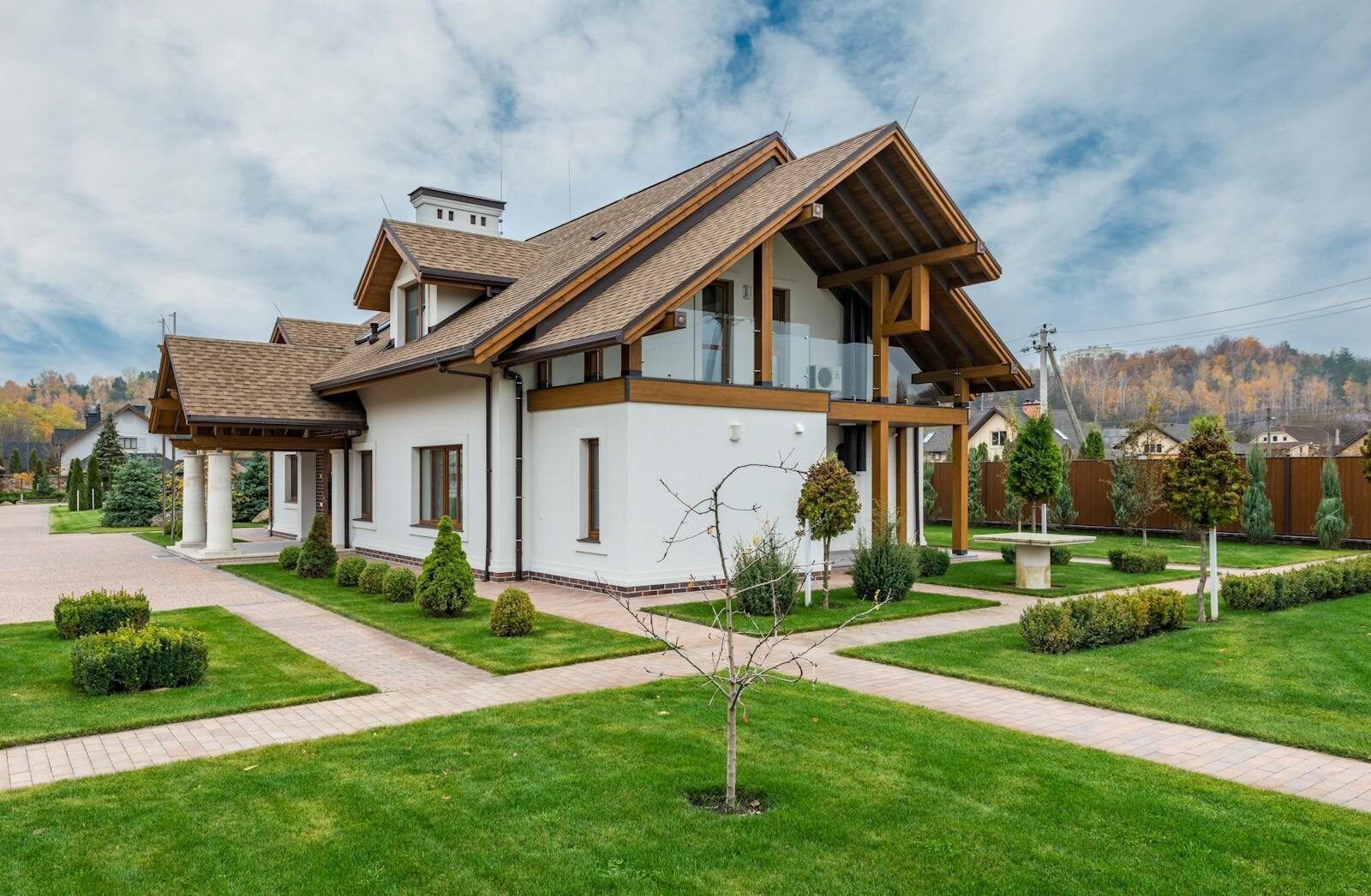
If you’ve ever stood on an empty lot and wondered which way your front door should point, you’re asking one of the smartest questions a homeowner can ask. House orientation — the direction your home faces — affects everything from your monthly energy bills and natural light to resale value and indoor comfort. And yet, most buyers and builders don’t think about it until it’s too late.
Whether you’re buying a newly constructed home, working with a custom builder, or evaluating a property on the market, this guide breaks down exactly what direction a house should face, why it matters, and how to apply that knowledge in the real world — with a particular focus on homes across the United States.
Why House Facing Direction Matters More Than You Think
The orientation of a house determines how sunlight moves through it throughout the day and across seasons. That directly influences:
- Natural heating and cooling costs — the biggest ongoing expense most homeowners face
- Daylighting quality — how bright and livable your interior spaces feel
- Moisture and mold risk — shaded exteriors dry slower
- Curb appeal and landscaping — which plants thrive and where
- Resale value — south-facing homes in colder U.S. climates consistently attract premium offers
According to the U.S. Department of Energy, passive solar design — which starts with proper home orientation — can reduce heating and cooling costs by 10% to 50% depending on climate zone. That’s not a minor detail. That’s potentially thousands of dollars every year.
The Best Direction for a House to Face in the USA (And Why)
South-Facing: The Gold Standard for Most of the United States
For the vast majority of American homeowners, a south-facing house is the optimal choice. Here’s the reasoning:
The sun rises in the east, arcs across the southern sky, and sets in the west — this is true across all of the continental United States because we sit in the Northern Hemisphere. A south-facing home captures low-angle winter sunlight through its main windows, passively warming the interior when heating costs are highest. In summer, the sun sits higher in the sky, so properly designed roof overhangs and eaves naturally block that hotter light without any mechanical intervention.
In practical terms, this means:
- Living rooms and kitchens on the south side stay naturally bright and warm in winter
- You reduce reliance on artificial heating and lighting
- Solar panel efficiency is maximized on south-facing roofs
- Snow melts faster off south-facing driveways and walkways — a real advantage in northern states like Minnesota, Michigan, and Colorado
Best for: New England, the Midwest, the Mountain West, the Pacific Northwest, and the Upper South. Essentially anywhere that experiences cold winters and heating costs are a concern.
North-Facing: When It Makes Sense
A north-facing house gets consistent, diffused indirect light — which means fewer harsh shadows and a more stable indoor temperature in climates where cooling costs dominate. Notably, north-facing interiors don’t receive direct sunlight, which can actually be a benefit in warmer states.
Best for: Florida, South Texas, Arizona, Southern California, and other Sun Belt states where air conditioning runs nine months of the year. In these regions, blocking direct solar gain through main windows is a priority, not a penalty.
If you’re buying or building in Phoenix, Miami, or Houston, a north-facing home can be a smart, energy-conscious choice. The logic simply flips when your biggest bill is cooling rather than heating.
East-Facing: Morning Light and Gentle Warmth
An east-facing home catches the morning sun through its main windows and facade. Many people genuinely love this — morning light in the kitchen and living areas creates a cheerful, productive start to the day. The tradeoff is that afternoons can be darker, and west-facing windows will get significant afternoon heat gain.
Best for: Homeowners who are up and active in the mornings, work from home, or live in moderate climates like the Pacific Coast where temperature extremes are minimal.
West-Facing: The Most Challenging Orientation
Honestly, west-facing is the least desirable orientation for most U.S. homes. Here’s why: the afternoon and evening sun hits the main facade directly, which creates intense heat gain (especially brutal during summer in the Southwest and Southeast), glare in living areas during peak hours, and higher cooling costs.
That said, it’s not a dealbreaker. West-facing homes can be mitigated with:
- Deep overhangs or pergolas on the west side
- High-quality low-E glass on west-facing windows
- Strategic landscaping with deciduous trees that block summer sun but allow winter light
- Light-colored or reflective exterior materials
If you’re evaluating a west-facing home on the market, don’t automatically walk away — but do price in these mitigation strategies and check the insulation quality carefully.
Regional Breakdown: Best House Orientation by U.S. Climate Zone
The U.S. spans a wide range of climate zones, and the “right” answer shifts meaningfully depending on where you are.
Cold Climate Zones (Zones 5–7): Northeast, Midwest, Mountain West
Recommended orientation: South-facing
States like Wisconsin, New York, Montana, Vermont, and Illinois benefit enormously from passive solar heating. A south-facing home in Chicago can reduce heating demand by a measurable margin compared to an identically sized north-facing home. Prioritize south-facing windows, especially in the main living spaces. Garages and utility rooms can face north — they don’t need to be warmed.
Mixed-Humid Climates (Zones 4–5): Mid-Atlantic, Carolinas, Tennessee
Recommended orientation: South-facing, with shade considerations
Here the goal is balancing winter solar gain with summer shading. South-facing orientation works well, but roof overhangs become critical to prevent summer overheating. Deciduous trees on the south and west sides provide shade in summer while allowing solar access in winter — a natural double benefit.
Hot-Dry Climates (Zone 3B): Southwest — Arizona, New Mexico, Nevada
Recommended orientation: South or North, with aggressive solar shading
In places like Tucson and Las Vegas, the sun is relentless nearly year-round. Many architects here design homes that turn their smallest face toward the south and west, and place main glazing (windows) on the north and east. Minimizing west-facing glass is especially critical. Reflective roofing and exterior shading structures are standard practice.
Hot-Humid Climates (Zone 2): Deep South — Florida, Gulf Coast, Southeast Texas
Recommended orientation: North-facing or East-facing
When cooling loads dominate every month of the year, you want to minimize solar heat gain through main windows. North-facing homes naturally do this. Additionally, consistent airflow through the home matters — homes that allow prevailing breezes from the south to enter from the rear (south side) and exit through north-facing openings can reduce cooling costs naturally.
Marine West Coast (Zone 4C): Pacific Northwest — Seattle, Portland
Recommended orientation: South-facing
The Pacific Northwest is famously cloudy, which makes maximizing every bit of available solar access even more important. South-facing homes in Seattle and Portland capture more passive solar gain on the rare sunny winter days and feel meaningfully warmer and brighter year-round compared to north-facing alternatives. This is a real quality-of-life difference in a region where Seasonal Affective Disorder (SAD) is a known concern.
What About Feng Shui and Other Cultural Considerations?
It’s worth acknowledging that house orientation has deep cultural significance beyond energy efficiency. In traditional Feng Shui, a south-facing front door is considered the most auspicious — symbolizing warmth, opportunity, and positive energy flowing into the home. Interestingly, this aligns almost perfectly with the passive solar logic for homes in the Northern Hemisphere, where south-facing entry maximizes natural light at the front of the home.
In many Asian-American communities across California, Texas, and the East Coast, Feng Shui orientation is a serious purchasing consideration. In competitive real estate markets in cities like San Francisco, Los Angeles, and the New York metro area, south-facing homes in desirable neighborhoods can command premium prices partly for this reason. Real estate agents working in these markets often highlight cardinal orientation in listings explicitly.
If you’re selling a home in one of these markets, it’s worth noting your home’s orientation in the listing description. If you’re buying, ask your agent.
How to Determine Which Direction Your House Faces
This is simpler than most people think:
A compass reading of around 180° means you’re facing south. A reading near 0° or 360° means you’re facing north. East is approximately 90°, and west is approximately 270°.
If you want to go deeper, tools like Sun Seeker (iOS) and Google Maps’ satellite view with a compass overlay can help you visualize exactly how the sun will arc over your property at different times of year.
Practical Tips for Homeowners Who Can’t Change Orientation
Already own a home that isn’t ideally oriented? You’re not stuck. Here are the most impactful adjustments to make:
For west-facing homes:
- Plant deciduous trees on the west side — they’re leafy in summer (blocking heat) and bare in winter (letting light through)
- Install exterior roller shades or solar screens on west-facing windows
- Apply low-E window film to existing glass — a DIY option that meaningfully reduces heat gain
For north-facing homes in cold climates:
- Add skylights on the south side of the roof to bring passive solar light into interior spaces
- Maximize south-facing windows during any renovation
- Use light interior finishes to bounce available light deeper into rooms
What Builders and Architects Know (That Most Buyers Don’t Ask)
Professional home designers think about orientation from the very first site sketch. When given a free-range lot, a good architect or custom builder will automatically orient the main living spaces — kitchen, living room, primary bedroom — toward the south. Garages, utility rooms, bathrooms, and storage areas are placed on the north and west sides to buffer against heat loss or gain.
If you’re working with a custom builder right now, this is one of the first questions to raise. Ask specifically: “How are you orienting the main living areas relative to true south?” If they can’t answer clearly, that’s a red flag worth exploring.
For buyers shopping existing homes, always check orientation before falling in love with a floor plan. A home’s layout can be modified over time. Its orientation cannot.
The Bottom Line
For most homeowners across the United States, a south-facing house is the optimal choice. It maximizes passive solar heating in winter, aligns with natural shading in summer, improves daylighting, and tends to perform better for solar panel installations. In hot-climate states where cooling dominates, north-facing orientation becomes more competitive — and in those markets, it’s the smarter choice.
Orientation isn’t everything — insulation, windows, landscaping, and floor plan layout all play important supporting roles. But when you’re starting from scratch on a lot or evaluating multiple properties on the market, orientation deserves to be near the top of your checklist.
A few degrees on a compass at the beginning of a project can translate to lower bills, higher comfort, and better resale value for the entire life of the home. That’s one of those rare decisions where doing the right thing and the smart thing happen to be exactly the same.