

If you’ve ever shopped for a vacuum cleaner, worked with industrial suction equipment, or even bought a breast pump or pool vacuum in the United States, you’ve probably come across numbers like “20 kPa,” “60 inHg,” or “120 CFM” — and had absolutely no idea what they meant or which one actually matters. You’re not alone.
Vacuum suction measurement is one of those technical topics that sounds intimidating but becomes completely manageable once someone breaks it down clearly. Whether you’re a homeowner comparing household vacuums, an engineer specifying industrial equipment, or a technician troubleshooting a suction system, understanding how vacuum is measured — and why different units and tools exist — will save you time, money, and frustration.
This guide covers everything you need to know: the units used across different industries in the U.S. and globally, the tools professionals use to measure vacuum, and the practical techniques that get accurate results every time.
What Is Vacuum Suction, Really?
Before diving into measurements, it helps to understand what we’re actually measuring.
Atmospheric pressure at sea level is approximately 14.7 PSI (pounds per square inch), or about 101.3 kPa. A vacuum is simply a space where the pressure is lower than the surrounding atmospheric pressure. When we talk about “suction,” we’re describing the pressure differential between the low-pressure zone and the ambient environment — that differential is what draws air (and dust, liquid, or debris) into the suction device.
So when you measure vacuum, you’re really measuring how far below atmospheric pressure a system can go. The deeper the vacuum, the stronger the suction potential — but the relationship between suction power and cleaning or lifting performance is more nuanced than a single number suggests. More on that in a moment.
Vacuum Suction Units: A Complete Breakdown
One of the most confusing things about vacuum measurement is that different industries use completely different units — sometimes for the same underlying quantity. Here’s a clear breakdown of every unit you’re likely to encounter.
Pascals (Pa) and Kilopascals (kPa)
The Pascal is the SI (International System of Units) standard for pressure, and by extension, for vacuum depth. One Pascal equals one Newton per square meter. Because atmospheric pressure is about 101,325 Pa, vacuum measurements in Pascals tend to be large numbers, which is why kilopascals (kPa) are far more commonly used.
A strong household upright vacuum might achieve 20–25 kPa of sealed suction, while a high-end central vacuum system can reach 30 kPa or more. Medical-grade suction equipment in the U.S. (used in hospitals and surgical settings) often specifies suction pressure in kPa as well.
Inches of Mercury (inHg) and Millimeters of Mercury (mmHg)
These legacy units come from the original mercury barometer — the height of a mercury column that pressure could support. They remain widely used in the United States, particularly in:
- HVAC and refrigeration (technicians use inHg for evacuating refrigerant lines)
- Automotive applications (intake manifold vacuum is measured in inHg)
- Medical suction (mmHg is standard in clinical and respiratory settings)
Standard atmospheric pressure equals 29.92 inHg or 760 mmHg. A full vacuum (absolute zero pressure) would theoretically register 29.92 inHg below atmospheric, though this is physically unachievable in practice. When an HVAC technician in Texas says they’re pulling a system down to 500 microns, they mean 500 millionths of an inch of mercury — an extremely deep vacuum.
PSI and PSIG vs. PSIA
In American industrial settings, vacuum is often expressed in PSI (pounds per square inch). But there’s an important distinction:
- PSIA (absolute) measures pressure relative to a perfect vacuum. Atmospheric pressure = 14.7 PSIA.
- PSIG (gauge) measures pressure relative to the current atmospheric pressure. A perfect vacuum = -14.7 PSIG.
When someone in a U.S. manufacturing plant says “we’re running at -10 PSIG,” they mean the system is 10 PSI below atmospheric — a moderate vacuum level. Understanding this distinction prevents dangerous miscalculations in pressurized and vacuum systems.
Millibar (mbar) and Bar
The millibar is popular in European vacuum equipment specifications and in meteorology. Atmospheric pressure is 1,013.25 mbar. Industrial vacuum pumps and chambers often rate their depth in millibar because it provides a convenient scale: rough vacuum spans from 1 to 1,000 mbar, fine vacuum from 0.001 to 1 mbar, and high vacuum goes below 0.001 mbar.
Torr and Microns
Named after Italian physicist Evangelista Torricelli (the inventor of the barometer), the Torr is nearly equivalent to mmHg. One Torr = 1/760 of atmospheric pressure = approximately 133.3 Pa.
The micron (or micrometer of mercury) equals one-thousandth of a Torr. This unit is almost exclusively used in HVAC evacuation across the United States. Before charging a refrigerant system with refrigerant, technicians are required to achieve a deep vacuum — typically 500 microns or less — to remove all moisture and non-condensable gases. Many digital manifold gauges sold in the U.S. today display readings directly in microns.
CFM and Air Watts: Measuring Suction Performance (Not Just Depth)
Here’s something that surprises many people: vacuum depth alone does not define cleaning performance. Two other measurements are just as important.
CFM (Cubic Feet per Minute) measures airflow — how much air moves through the vacuum per minute. High CFM means the vacuum can move large volumes of air, which is critical for picking up light debris and maintaining suction through partially clogged filters.
Air Watts is a combined performance metric that factors in both suction pressure and airflow. The formula is:
Air Watts = (Airflow in CFM × Vacuum in inches of water lift) ÷ 8.5
This is why a vacuum with 150 CFM airflow and modest suction depth can outclean one with very deep suction but minimal airflow. It’s the product of both that does the work. For consumer vacuum cleaners sold in the United States, Air Watts has become an increasingly common metric in product specifications since it better represents real-world performance.
Quick Conversion Reference Table
| Unit | Equivalent at Full Atmospheric Pressure |
|---|---|
| 1 atmosphere (atm) | 14.7 PSI / 101.3 kPa / 760 mmHg / 29.92 inHg / 1013.25 mbar |
| 1 inHg | 3.386 kPa / 25.4 mmHg / 0.491 PSI |
| 1 kPa | 0.295 inHg / 7.50 mmHg / 0.145 PSI |
| 1 Torr | 133.3 Pa / 1 mmHg (approx.) / 0.0193 PSI |
| 500 microns | 0.5 Torr / 0.0193 PSI / 66.7 Pa |
Vacuum Measurement Tools: What Professionals Use
Knowing which instrument to reach for depends entirely on what you’re measuring and the depth of vacuum involved. Here’s a rundown of the main tools, from the simplest to the most sophisticated.
Analog Vacuum Gauges
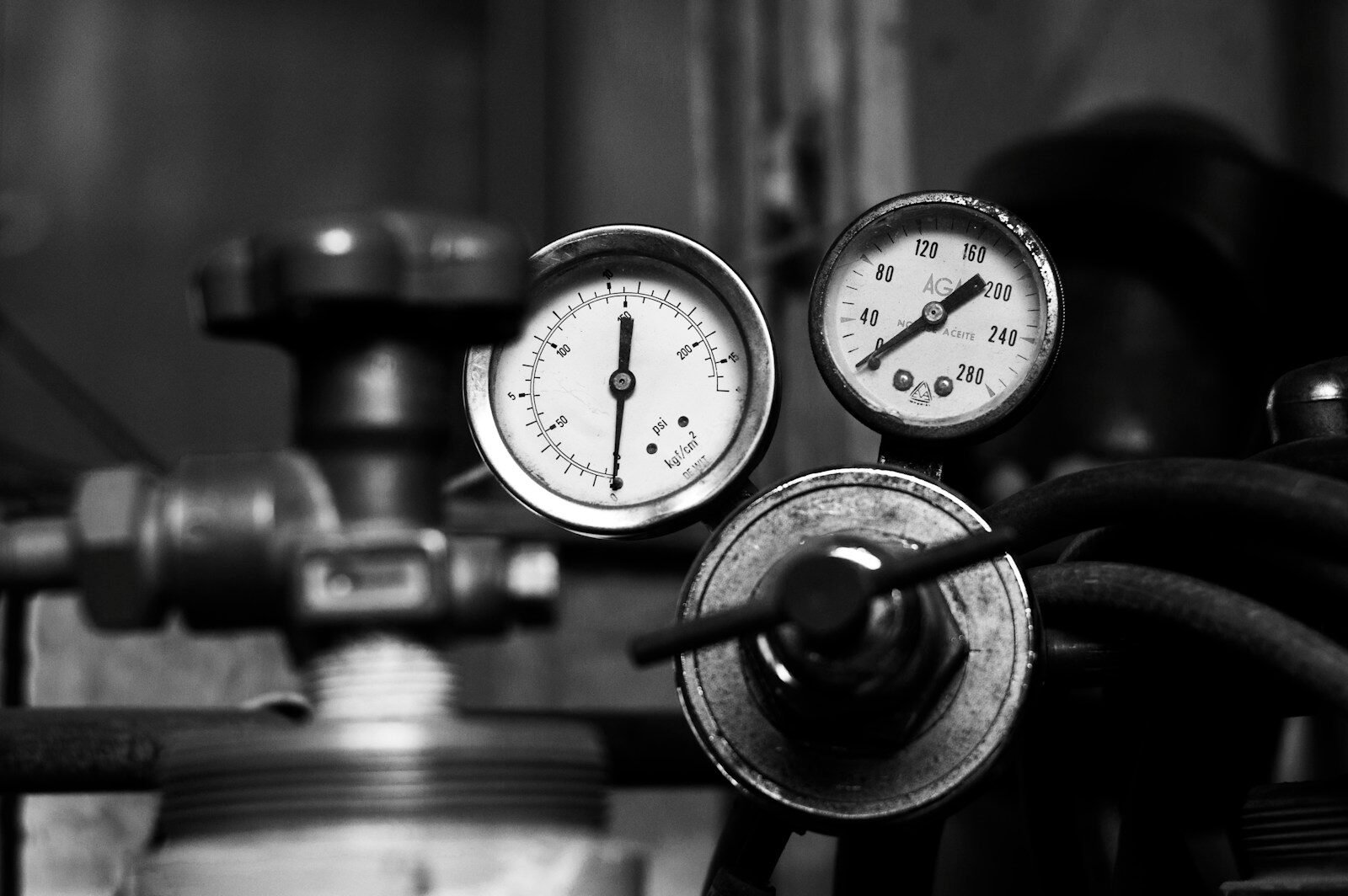
The most basic tool for vacuum measurement is the bourdon tube gauge or diaphragm gauge — a mechanical device that translates pressure differential into a needle position on a dial. These gauges are widely available at hardware stores and HVAC supply houses across the U.S. for $20–$100.
They’re rugged, require no power source, and work well for rough vacuum applications — automotive, basic HVAC work, and general industrial use. Their main limitation is accuracy at very deep vacuums; below about 1 inHg, analog gauges become unreliable.
Digital Vacuum Gauges and Manifold Sets
Modern HVAC technicians in the United States have largely shifted to digital manifold gauge sets with built-in vacuum measurement. These digital instruments display readings in microns, PSI, inHg, and other units simultaneously, and many connect via Bluetooth to smartphones for data logging.
Brands like Yellow Jacket, Fieldpiece, and Testo are popular among American HVAC professionals. A quality digital manifold can measure vacuum to 10 microns or better, and many include automatic leak detection alerts.
Thermocouple Vacuum Gauges (Pirani Gauges)
For fine and high vacuum work — think scientific instruments, semiconductor manufacturing, and vacuum coating equipment — thermocouple (Pirani) gauges are the standard. These instruments work by measuring how quickly a heated wire loses heat to the surrounding gas molecules.
Pirani gauges are accurate across the range of approximately 0.001 to 10 Torr (roughly 0.13 to 1,333 Pa). They’re common in research institutions, university laboratories, and advanced manufacturing facilities across the U.S.
Capacitance Manometers
For applications demanding the highest accuracy — pharmaceutical manufacturing, research reactors, and calibration standards — capacitance manometers are often used. These instruments measure the deflection of a thin metal diaphragm caused by pressure difference, translating that deflection into an extraordinarily precise pressure reading.
Capacitance manometers can measure vacuums from atmospheric pressure all the way to 0.0001 Torr with high repeatability and are unaffected by gas composition, making them the preferred choice for any application where the type of gas in the vacuum chamber changes.
Ionization Gauges
For ultra-high vacuum (UHV) applications below 0.001 Pa — such as particle accelerators, space simulation chambers, and advanced thin-film deposition — ionization gauges (hot cathode or cold cathode) are required. These measure vacuum by ionizing gas molecules and measuring the resulting ion current; fewer molecules means less current.
Facilities like national research laboratories and aerospace manufacturers use these extensively. Proper calibration of ionization gauges typically follows NIST (National Institute of Standards and Technology) traceable standards to ensure measurement accuracy.
Water Lift Gauges
Specific to vacuum cleaner testing, the water lift gauge (also called the sealed suction test) measures how many inches of water column a vacuum motor can support in a sealed tube. It’s the industry standard for rating household vacuum suction in the U.S. and is directly related to the motor’s ability to create negative pressure.
A strong household vacuum typically achieves 90–120 inches of water lift. Central vacuum systems can exceed 150 inches. This measurement is taken with the vacuum outlet completely sealed, so it represents maximum suction potential rather than operating suction.
Vacuum Measurement Techniques: Getting It Right
Even the best gauge gives misleading results if the measurement technique is poor. These are the practices professionals follow to get accurate, repeatable readings.
Stabilize Before Reading
Vacuum systems take time to reach equilibrium, especially in larger volumes. Always allow the system to stabilize for at least 30–60 seconds after the target vacuum level appears to be reached before recording a measurement. This is especially important in HVAC evacuation, where moisture outgassing can cause readings to drift upward initially even with a properly functioning pump.
Account for Altitude
Atmospheric pressure decreases with elevation, and since most vacuum gauges measure pressure relative to ambient (gauge pressure), your readings will differ at altitude compared to sea level. In high-elevation U.S. cities like Denver, Colorado (elevation ~5,280 feet), atmospheric pressure is approximately 12.1 PSI rather than 14.7 PSI at sea level.
Check for Gauge Calibration Drift
Mechanical gauges drift over time and with temperature changes. Digital gauges, while more stable, can also shift. In any application where accuracy matters — medical suction, laboratory work, HVAC refrigerant evacuation — always zero your gauge against a known reference before measurement. Many digital manifold gauges have an auto-zero function that should be activated at the start of each work session.
Leak-Check the Measurement System Itself
One of the most common mistakes in vacuum measurement is getting a false high reading (not deep enough vacuum) because the measurement hoses or fittings themselves are leaking. Before trusting a vacuum reading in any professional application, isolate the gauge from the pump with the system valve closed and watch for pressure rise.
Use the Right Gauge for the Pressure Range
Every vacuum gauge has an optimal measurement range. Using a 30 inHg gauge to measure a vacuum of 500 microns is like using a bathroom scale to weigh a postage stamp — the instrument simply isn’t designed for that range. Match the gauge type and range to the vacuum depth you expect:
- Rough vacuum (760 to 1 Torr): Bourdon tube or digital gauge
- Fine vacuum (1 to 0.001 Torr): Pirani or thermocouple gauge
- High vacuum (below 0.001 Torr): Capacitance manometer or ionization gauge
Understanding Vacuum Depth Categories
Vacuum engineers and scientists categorize vacuum into ranges that correspond to practical applications. Understanding these ranges helps contextualize the measurements you encounter.
Low (Rough) Vacuum: 760 to 1 Torr This covers most everyday applications — household vacuums, automotive intake manifolds, woodworking vacuum presses, and basic HVAC evacuation. Standard analog and digital gauges are perfectly adequate here.
Medium Vacuum: 1 to 0.001 Torr Used in vacuum packaging (think the food-sealing machines sold by brands like FoodSaver across the U.S.), vacuum forming for plastics, laboratory desiccators, and some medical suction applications. Pirani gauges are appropriate at this level.
High Vacuum: 0.001 to 0.000001 Torr This is the realm of electron microscopes, vacuum coating equipment, and research instruments.
Ultra-High Vacuum: Below 0.000001 Torr Particle physics research, space simulation, and advanced semiconductor fabrication operate at UHV levels. These systems require specially designed chambers, baked-out metals, and sophisticated instrumentation.
Vacuum Suction in Everyday American Life: Practical Context
You interact with vacuum measurement more than you probably realize.
When an HVAC technician evacuates your home’s air conditioning system before charging it with refrigerant — a legal requirement under EPA Section 608 — they’re pulling the system to at least 500 microns and holding it there to confirm there are no leaks or residual moisture. That measurement directly affects how long your equipment will last and how efficiently it runs.
When you buy a vacuum cleaner, the specs printed on the box or listed on the manufacturer’s website often include sealed suction (in kPa or inHg), airflow (in CFM), and sometimes Air Watts. Knowing that a machine rated at 270 Air Watts will outperform a competitor rated at 200 Air Watts — even if the competitor boasts higher sealed suction — can save you from a disappointing purchase.
In pool maintenance, suction-side pool cleaners and manual vacuum heads rely on the differential pressure created by your pool pump.
For a deeper look at how suction performance specifications are tested and standardized for consumer products in the United States, you can refer to the testing methodology published by the American Society for Testing and Materials (ASTM International), which maintains widely adopted standards for vacuum cleaner performance measurement used by manufacturers and independent testing labs alike.
Common Mistakes to Avoid
Confusing suction with airflow. A vacuum with enormous sealed suction but minimal CFM will struggle to maintain suction through a dirty filter or deep pile carpet. Real-world performance requires both.
Ignoring units. A spec listed as “20 kPa” and one listed as “6 inHg” are nearly the same thing (6 inHg ≈ 20.3 kPa). Always convert to a common unit before comparing products or system specifications.
Assuming deeper is always better. For most household vacuums, performance plateaus around 20–25 kPa of sealed suction. Higher suction doesn’t continue to improve cleaning beyond a practical threshold — and it can even reduce airflow if the motor isn’t matched appropriately to the filtration system.
Neglecting temperature effects. Vacuum pump performance degrades at high temperatures. In industrial applications, measuring vacuum in an extremely hot system without accounting for thermal expansion and outgassing leads to inaccurate results.
Actionable Takeaways
Here’s what you can apply immediately, regardless of why you’re working with vacuum systems:
- For HVAC work: Always use a micron gauge — not a standard manifold — for evacuation verification. Pull to 500 microns or less and perform a decay test before charging.
- For buying a vacuum cleaner: Look for Air Watts or the combination of CFM + sealed suction rather than relying on any single metric. A machine rated 200+ Air Watts with 80+ CFM airflow will serve most homes well.
- For industrial applications: Match your gauge to your vacuum range, calibrate regularly against a NIST-traceable reference, and always perform a leak check on the measurement system before trusting your readings.
- For altitude: If you’re in a high-elevation U.S. city, adjust your baseline atmospheric pressure accordingly. Denver residents, for instance, should expect gauge readings to behave differently from those at sea level.
- For medical or critical applications: Use calibrated capacitance manometers or equivalent precision instruments, and keep calibration records in compliance with applicable regulatory requirements.
Final Thoughts
Vacuum suction measurement isn’t just a niche topic for engineers — it touches everything from the cleanliness of your floors to the efficiency of your HVAC system and the safety of medical equipment. Once you understand that vacuum is simply a pressure differential, that different industries standardized on different units for historical reasons, and that the right tool must match the right measurement range, the complexity melts away.
Whether you’re troubleshooting a suction system in a manufacturing plant in Ohio, evaluating vacuum cleaner specs before a purchase, or evacuating a refrigerant system in Florida heat, the principles described here apply directly. Measure smart, convert carefully, and always match your tool to your task.