

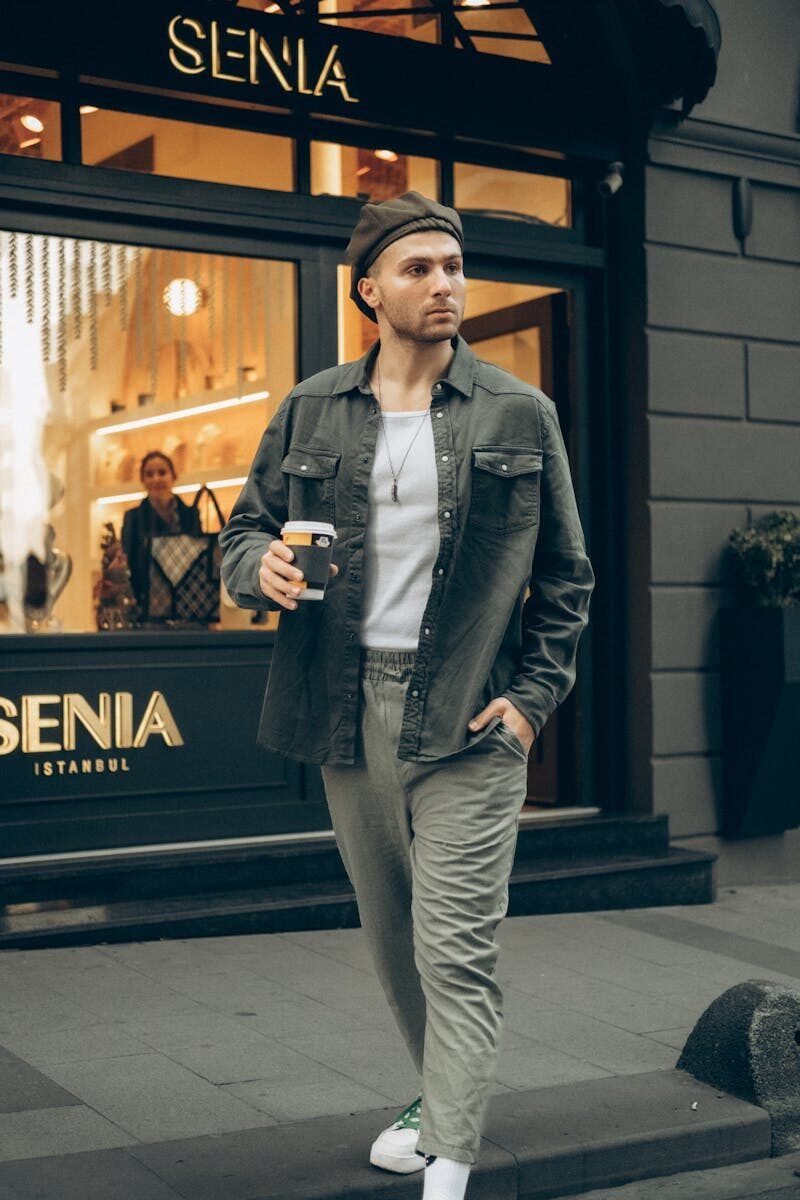
Street fashion has always been where the most honest conversations about culture, identity, and creativity happen. Not on runways in Paris or Milan — though those shows borrow from the streets constantly — but on the sidewalks of New York’s Lower East Side, the skate parks of Los Angeles, the vintage markets of Chicago’s Wicker Park, and the neighborhood blocks of Atlanta and Houston where personal style is worn like a statement.
In 2026, street fashion is doing something particularly interesting: it’s pulling in opposite directions at once. Maximalism and quiet luxury are coexisting. Vintage and futuristic aesthetics are being layered in the same outfit. Comfort and sharp tailoring are no longer considered opposites. The result is a moment that genuinely rewards experimentation — and one where there are very few rules left to break.
Whether you’re building a wardrobe from scratch, refreshing what you already own, or just trying to understand what you’re seeing on the streets and in your feed, this guide breaks down the top street fashion trends of 2026, why each one matters, and exactly how to wear them in real life.
Why Street Fashion Matters More Than Ever in 2026
Before diving into the trends themselves, it’s worth acknowledging what’s driving them. A few converging forces are reshaping how Americans dress and where they get their style inspiration.
Social media — particularly TikTok and Instagram — has collapsed the traditional trickle-down fashion cycle. A micro-trend born in Brooklyn or on a Tokyo side street can go globally mainstream within two weeks. This has made street fashion the primary engine of the industry rather than a downstream recipient of high fashion decisions.
At the same time, resale platforms like Depop, ThredUp, and Poshmark have made vintage and secondhand clothing genuinely mainstream, especially among Gen Z buyers. The average American now buys roughly 68 garments per year, but a growing segment — particularly urban millennials and Gen Z — is moving toward fewer, better pieces sourced from vintage markets, local designers, and sustainable brands.
The result is a street fashion moment that’s more personal, more politically aware, and more visually adventurous than it’s been in years.
1. Workwear Utility — Function as Fashion
If there’s one overarching aesthetic that defines 2026 street fashion across every U.S. city, it’s utilitarian workwear. Carpenter pants, Dickies-style straight-leg trousers, Carhartt-influenced canvas jackets, and work boots originally designed for construction sites have become some of the most sought-after pieces in fashion-forward wardrobes.
This isn’t a new phenomenon — workwear has surfaced in street fashion cycles before — but what’s different now is the level of refinement. High-end brands including Lemaire, Engineered Garments, and homegrown American label Our Legacy are producing elevated takes on work-inspired silhouettes, while the originals from Carhartt WIP, Dickies, and Ben Davis are being worn straight off the shelf as fashion items.
How to Wear It
The key to wearing workwear well is intentionality. One or two utility pieces in an outfit reads as purposeful; an all-over workwear look can feel costumey unless you’re genuinely working in it.
A great entry point: wide-leg carpenter pants in olive or stone brown, a fitted white or black crewneck, and clean leather work boots. Add a canvas chore coat in the cooler months. The silhouette is relaxed but structured, and it layers easily with both casual and smart pieces.
In cities like Chicago and Detroit, where workwear heritage is genuinely part of local identity, this trend feels particularly authentic. In coastal cities like L.A. and New York, it reads as a deliberate aesthetic choice — which is equally valid.
2. Quiet Luxury Streetwear — The Anti-Hypebeast
For the past decade, streetwear was synonymous with loud branding — massive logos, heavily graphic pieces, limited-edition drops that sold out in seconds and resold for triple retail. In 2026, a significant segment of the street fashion community is actively moving away from that model.
Quiet luxury streetwear is defined by exceptional fabric quality, understated cuts, and deliberately minimal branding. Think navy cashmere crew necks, well-cut straight trousers in charcoal or camel, clean white Oxford shirts with no visible logo, and leather loafers or simple leather sneakers. The outfit communicates taste through material and fit rather than through recognizable branding.
This aesthetic draws from European heritage brands — Loro Piana, Brunello Cucinelli, A.P.C. — but it’s being executed at every price point. American brands like Everlane, Banana Republic’s elevated Martin line, and newer direct-to-consumer labels like Buck Mason and Mack Welsh are delivering this aesthetic at accessible price points.
How to Wear It
An ill-fitting cashmere sweater defeats the entire purpose. Prioritize tailoring — even inexpensive pieces elevate dramatically when they fit correctly.
Color palette stays within a narrow, sophisticated range: ivory, camel, stone, charcoal, navy, and forest green. Accessories should be similarly restrained — a simple leather belt, a watch with a clean dial, and shoes with minimal branding.
This is a wardrobe that rewards investment in individual pieces rather than quantity. Start with two or three foundation items you love and build slowly.
3. Oversized Tailoring — Deconstructed Business Casual
The suit hasn’t died — it’s just been reimagined. Oversized blazers worn over hoodies, wide-leg suit trousers paired with sneakers, and double-breasted jackets in unexpected fabrics like linen or technical nylon are among the most versatile and photographed looks on American streets this year.
This trend blurs the line between formal and casual in a way that suits the reality of how many Americans now work and socialize — in hybrid offices, creative studios, and environments where strict dress codes no longer exist.
Thrift stores and vintage markets are the best source for oversized tailoring. An oversized men’s blazer from a thrift shop costs $15–$40 and immediately anchors an outfit when worn over a simple T-shirt or dress. Brands like Zara, & Other Stories, and Madewell have also leaned into this with women’s oversized blazer styles that have become consistent bestsellers.
How to Wear It
The counterintuitive rule with oversized tailoring is to keep everything else fitted or simple. A voluminous blazer over a structured crewneck and slim trousers works because the blazer is the statement. Adding oversized trousers underneath tips it from fashion-forward into shapeless.
For women, an oversized blazer worn as a dress — belted at the waist with a wide leather belt — over a fitted turtleneck and knee-high boots is one of the most adaptable and striking combinations the trend offers.
4. Y2K Revival — Early 2000s Are Back (Again, and Stronger)
The Y2K aesthetic has been cycling back in and out of street fashion for several years now, but in 2026 it’s hitting a more mature second wave — one that’s more edited and wearable than the first revival’s maximalist throwback approach.
This wave focuses on the cleaner elements of early 2000s fashion: low-rise wide-leg jeans, baby tees with small graphic prints, velour tracksuits in muted tones, chunky platform sneakers, and the kind of casual logomania that feels retro rather than try-hard.
Brands that defined the era — Von Dutch, Juicy Couture, and FUBU — have all relaunched with updated interpretations of their original designs. Meanwhile, vintage versions of these pieces on Depop and eBay routinely sell for multiples of their original retail price, which signals genuine demand rather than fleeting trend energy.
How to Wear It
The Y2K revival rewards restraint. Pick one or two elements — a baby tee and low-rise flared jeans, or a velour hoodie with straight-cut trousers — rather than assembling the full 2002 look. The goal is nostalgic reference, not time travel.
Platform sneakers are the easiest way to tap into the trend without overhauling your wardrobe. New Balance’s 990v5 and 574, Skechers’ D’Lites platform line, and Buffalo London’s iconic platforms are all having significant commercial moments in 2026.
5. Gorpcore — Outdoor Gear as Street Style
Gorpcore (derived from “Good Old Raisins and Peanuts” — trail mix — as slang for outdoor enthusiasts) is the aesthetic that makes technical outdoor gear appropriate, even desirable, on city streets. In 2026 it’s evolved from a niche subculture into a mainstream wardrobe pillar.
The building blocks: Arc’teryx shells worn over fleece midlayers, Salomon trail running sneakers, Patagonia vests, Columbia PFG shirts, wide-brim sun hats, and Osprey daypacks worn as style accessories. What makes this genuinely impressive is that the pieces look expensive and considered even though most of them are designed for function rather than fashion.
The gorpcore boom has been driven substantially by younger urban Americans who want clothing that performs during weekend outdoor activities but doesn’t require a full wardrobe change between trail and coffee shop. Brands like Arc’teryx, Patagonia, and North Face have responded by producing limited urban colorways of technical pieces that blur the line even further.
How to Wear It
Salomon XT-6 or ACS Pro sneakers are the single fastest entry point into gorpcore. Pair them with any combination of relaxed-fit jeans, technical cargo trousers, and a fleece or puffer midlayer. A functional daypack completes the look without requiring anything else to change.
The color palette naturally steers toward earth tones — stone, moss green, bark brown — punctuated by the occasional bright color accent typical of technical outdoor gear.
6. Denim Maximalism — More Denim, Different Rules
Double denim — once the style crime that fashion magazines warned against — has not only been rehabilitated but elevated. In 2026, denim-on-denim is a deliberate, confident choice, and the category has expanded well beyond jeans and a jean jacket.
Denim maxi skirts, denim corsets, denim trenches, and even denim boots are appearing in the wardrobes of style leaders in New York, Los Angeles, and Miami. The texture and tonal variety within denim — raw indigo, bleached, acid wash, black, and mid-wash blue — provides enough differentiation that an all-denim outfit can be visually complex and intentional.
Levi’s remains the foundational American denim brand, and their 501, 505, and Ribcage styles are all experiencing strong commercial moments. Independent denim labels like Mother Denim and Boyish have developed devoted followings for their premium fabric and slightly unconventional cuts.
How to Wear It
The rule for denim maximalism is tonal awareness. Mixing very different washes (light blue jacket over dark indigo jeans) creates contrast and visual interest. Wearing the same wash head-to-toe can work but requires a confident commitment.
Add a non-denim element — a leather belt, a cashmere top, white sneakers — to break up the texture and give the eye a place to rest. The best denim maximalism looks deliberately constructed, not accidentally uniform.
7. Bold Color Blocking — Confident, Graphic, Optimistic
After several years of muted, earthy palettes dominating street fashion, 2026 is a color moment. Bright, confident color blocking — wearing two or three high-saturation colors together in distinct panels or garment combinations — is appearing across every demographic and city.
Think cobalt blue trousers with a fire-engine red crewneck and white sneakers. A chartreuse oversized jacket over a purple turtleneck. Tangerine and pink color-blocked joggers paired with a crisp white T-shirt. The looks are unapologetically bold and signal a collective desire for visual joy after years of aesthetic restraint.
This trend is particularly strong in Atlanta, Houston, and Miami — cities with vibrant community cultures where expressive dressing has always been central to local identity.
How to Wear It
Color blocking works best when the colors you choose share a relationship — either complementary (opposite on the color wheel) or analogous (neighboring). Cobalt and tangerine are complementary and create high energy contrast. Forest green and butter yellow are analogous and feel more harmonious.
Keep silhouettes relatively simple when doing bold color blocking. The color is the statement; elaborate cuts and textures compete with it for attention.
8. Vintage Logomania — Retro Brand Culture
Not all logomania is created equal. In 2026 the version that’s compelling isn’t the modern monogram-on-everything luxury approach, but rather vintage logos from American sportswear, collegiate athletics, and early 2000s streetwear. Champion, Tommy Hilfiger, Nautica, and early-era Nike and Adidas pieces are the most sought-after.
This is also a remarkably accessible trend. Goodwill, Salvation Army, and local thrift stores across the U.S. are reliable sources, as are eBay, Depop, and the growing network of vintage pop-up markets in most mid-sized American cities.
How to Wear It
Vintage logo pieces work best as the center of an otherwise simple outfit. A vintage Nautica windbreaker over a white tee and clean straight-leg jeans lets the piece speak for itself. Stacking multiple vintage logos in one outfit risks looking cluttered rather than curated.
9. Elevated Athleisure — Performance Meets Polish
Athleisure never really went anywhere, but its 2026 iteration is noticeably more polished than the yoga pants-and-hoodie version of previous years. The new elevated athleisure combines performance fabrics with tailored silhouettes — think fitted track pants with a clean crease, athletic-fit polo shirts in technical fabric, and structured nylon bomber jackets.
Brands like Lululemon (particularly their ABC trouser and Commission pant lines), Vuori, and Alo are producing pieces that genuinely read as smart casual rather than gym-adjacent. Sporty luxury labels like Loro Piana’s Lotus line and Brunello Cucinelli’s cashmere athletic pieces exist at the high end of this spectrum.
In American cities where active lifestyles drive wardrobe decisions — Denver, Portland, Seattle, Austin — elevated athleisure isn’t a trend so much as the dominant daily wardrobe.
How to Wear It
The elevation comes from fit and footwear. A slim technical jogger pant looks entirely different with white leather sneakers and a structured blazer than it does with running shoes and a hoodie. Invest in one pair of truly excellent slim-fit athletic trousers and let them anchor multiple outfits.
10. DIY and Customization Culture — Making It Yours
The most significant meta-trend running through all of 2026’s street fashion is personalization. Embroidery patches on denim jackets, hand-painted graphics on white sneakers, bleach-dyed and tie-dyed basics, and custom screenprinted T-shirts representing local neighborhoods, sports teams, or personal statements — making clothing yours rather than buying something identical to everyone else is the defining creative impulse of the moment.
This trend has been powered by a generation that grew up watching YouTube tutorials and feels confident altering, dyeing, and embellishing their own clothing. Craft platforms like Etsy are doing significant business in custom fashion services, and local embroidery shops in cities including Chicago, Nashville, and Portland report waiting lists for custom jacket work.
How to Start
You don’t need artistic skill to engage with customization culture. Iron-on patches on a denim jacket, a single embroidered word on a baseball cap, or a bleach-dye technique on a basic white tee are all achievable in an afternoon with materials available at any craft or fabric store.
The philosophy is simple: a piece you’ve personalized is one you’ll value and wear more — which is both a style win and a more sustainable approach to fashion.
Building a Street Fashion Wardrobe That Actually Works
Reading trend roundups is easy. Building a wardrobe that incorporates them in a personal, wearable way is the harder and more worthwhile challenge.
A few principles that apply regardless of which trends resonate with you:
Start with your existing wardrobe. Most trends can be tapped through one or two new items added to what you already own, rather than a full overhaul. A pair of carpenter pants and some gorpcore sneakers can unlock three or four trends without wholesale replacement.
Buy secondhand where possible. In 2026, the range and quality of secondhand fashion available through platforms like ThredUp, Poshmark, and in-person vintage stores is better than it’s ever been. You’ll spend less, find more unique pieces, and engage with fashion more sustainably.
Prioritize fit above all else. Every trend on this list is undermined by poor fit. Whether you’re wearing quiet luxury or workwear utility, clothes that fit your body correctly communicate intention. Tailoring inexpensive pieces is almost always worth the $15–$30 investment.
Ignore what doesn’t resonate. Street fashion is most compelling when it’s personal. If Y2K revival does nothing for you, there are nine other trends here worth exploring. The goal is a wardrobe that feels genuinely like you, not a comprehensive inventory of everything that’s currently fashionable.
According to the Council of Fashion Designers of America, American consumers are increasingly prioritizing longevity and personal expression over fast fashion volume — a shift that aligns with virtually every trend on this list and signals that street fashion’s current direction is more than a passing moment.
Frequently Asked Questions
What is the biggest street fashion trend in 2026? Workwear utility and quiet luxury streetwear are the two most pervasive aesthetics across American cities in 2026, though gorpcore and oversized tailoring are close behind. The broader meta-trend — personalization and intentional dressing — cuts across all of them.
How do I follow street fashion trends on a budget? Thrift stores, Depop, Poshmark, and ThredUp are the most accessible entry points. Many of this year’s strongest trends — workwear utility, vintage logomania, Y2K revival — are cheapest and most authentically sourced secondhand.
Can I mix multiple trends in one outfit? Yes, and the best street style does exactly that. Gorpcore sneakers work with a quiet luxury outfit. Workwear utility trousers pair naturally with vintage logomania tops. The key is maintaining a coherent color story and silhouette relationship between the pieces.
Where is street fashion most influential in the United States? New York, Los Angeles, Atlanta, and Chicago remain the most influential street fashion cities in the U.S. But Austin, Portland, Miami, and Houston have developed distinctive regional aesthetics that are increasingly shaping national trends.
Final Thoughts
Street fashion in 2026 rewards curiosity and personal conviction over trend-chasing. The most interesting people on the streets of any American city right now aren’t wearing a single trend head-to-toe — they’re mixing workwear with quiet luxury, vintage logos with oversized tailoring, gorpcore sneakers with denim maximalism, and making it feel completely natural.
The trends in this guide aren’t rules. They’re invitations. Pick the ones that genuinely speak to how you want to move through the world, wear them in the way that feels like you, and let the rest go. That’s always been the actual definition of street fashion — and it’s what makes it worth paying attention to.