

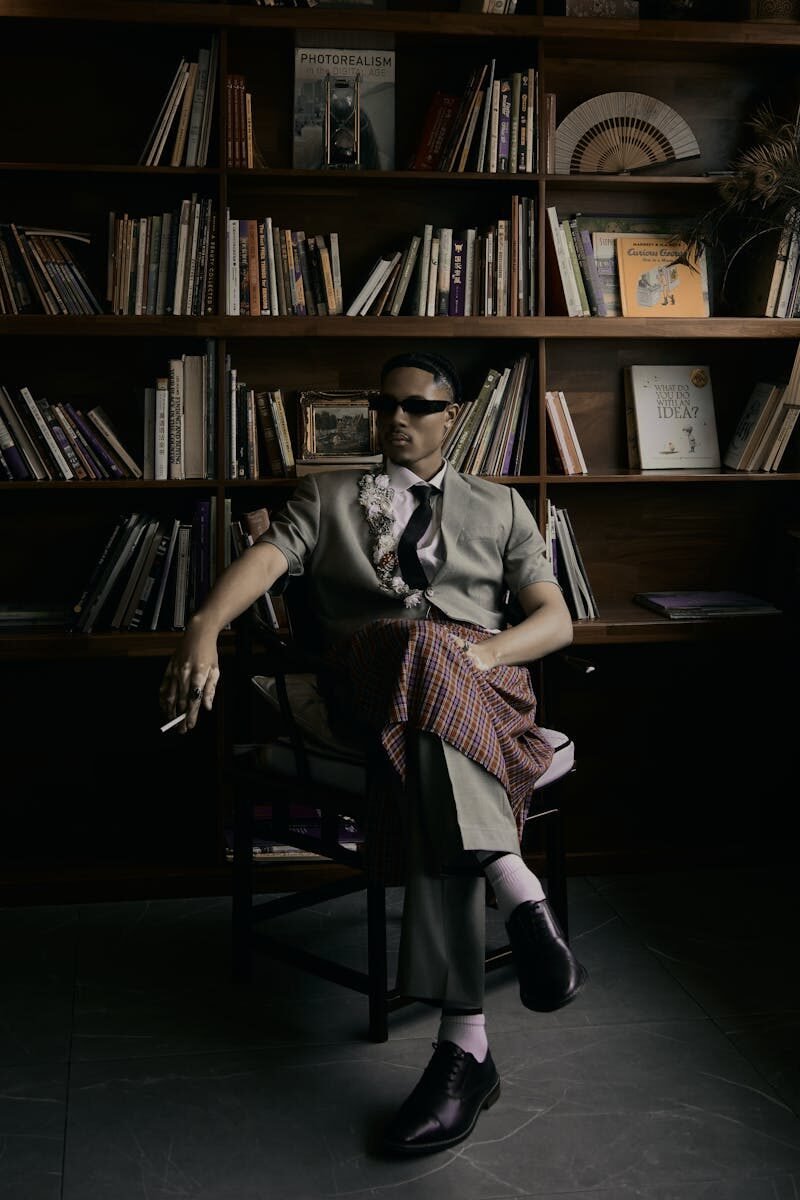
Men’s fashion has entered one of its most genuinely exciting eras in decades. The rigid boundaries that once separated “acceptable” masculine dressing from everything else have dissolved — and what’s replaced them is a landscape where a man can wear a tailored double-breasted suit to a gallery opening, a linen overshirt to a client meeting, or a draped asymmetric coat to dinner and have each choice read as deliberate, confident, and current.
Vogue Men — the international authority on elevated men’s style — has been at the forefront of documenting this evolution. From Vogue Italia’s Uomo editions to the editorial vision of British Vogue’s men’s coverage, the imagery and styling direction coming out of these publications in 2025 and 2026 reflects a new masculine aesthetic: one built on craftsmanship, intentionality, and the kind of quiet confidence that needs no external validation.
This guide breaks down the best Vogue Men looks inspiring modern style in 2026 — what they are, why they work, and exactly how to translate runway and editorial energy into real wardrobe choices that fit American men’s lives.
What Makes a “Vogue Men” Look Different?
Before diving into specific aesthetics and outfit formulas, it’s worth understanding what separates Vogue-level men’s style from generic fashion advice.
The defining characteristics are consistent across the publication’s global editions:
Intentionality over trends. A Vogue Men look isn’t assembled from whatever is currently trending — it reflects a point of view. Each piece is chosen because it contributes something specific to the overall composition of the outfit, whether that’s texture, proportion, or color.
Investment in fabric and construction. The materials used in high-fashion editorial work — heavyweight wools, silk-cotton blends, Japanese selvedge denim, Italian leather — behave differently on the body than their mass-market equivalents. Understanding this doesn’t mean you need to spend runway prices, but it does mean that fabric quality is worth prioritizing.
Proportion as the primary design tool. Vogue Men consistently demonstrates that silhouette — the relationship between how clothing fits the body and how different volumes work together — is the most powerful element in a well-dressed man’s toolkit.
Grooming as part of the look. Men’s Vogue styling always treats haircut, skin, and grooming as integral to the overall aesthetic, not an afterthought. The best outfit is undermined by grooming that sends an inconsistent message.
With that foundation in place, here are the looks and aesthetics that define modern Vogue Men style inspiration in 2026.
1. The New Suiting — Relaxed Luxury Tailoring
Suiting is having the most interesting moment it’s seen since the power suits of the 1980s, but the 2026 version operates from an entirely different premise. Where the power suit was about projection and authority, the new suiting is about ease, personal comfort, and a kind of unstudied elegance.
Vogue Men’s recent editorial spreads have consistently showcased oversized, single-button blazers in unexpected fabrics — unstructured linen in sage and stone, double-faced wool in deep burgundy, technical nylon with the visual weight of traditional suiting. Trousers are wide-legged, high-waisted, and break generously at the shoe. The overall silhouette has volume without bulk.
What’s particularly striking in the Vogue Men approach to new suiting is the way it subverts traditional formality signals. Suit jackets are worn over crew-neck T-shirts or thin turtlenecks. Wide trousers are paired with chunky leather loafers or clean white sneakers. A tie, if present at all, is loosened or replaced with a simple chain.
How to Build This Look
Start with the trouser. A high-waisted wide-leg trouser in a neutral — charcoal, oatmeal, or navy — is the single most transformative investment in modern tailoring. Pair it with a trim-fitting turtleneck in the cooler months or a textured crew-neck T-shirt in summer, and finish with leather dress shoes or clean leather sneakers depending on occasion.
Add the blazer as the final layer rather than the starting point. Wearing a blazer slightly large — one to two sizes up from your standard fit — creates the effortless drape that Vogue Men captures in editorial work. In the U.S. market, brands like Todd Snyder, Theory, and Banana Republic’s premium Republic label offer this silhouette at accessible price points.
2. Tonal Dressing — One Color, Many Textures
One of the most consistent and impactful techniques running through Vogue Men’s 2025–2026 editorial work is tonal dressing: building an entire outfit within one color family by varying texture, fabric weight, and shade rather than introducing contrasting colors.
An all-camel look that combines a cashmere coat, a brushed-cotton crew neck, and pleated wool trousers reads as deeply sophisticated precisely because the eye is drawn to the textural variation rather than color contrast. The same principle works in navy, olive, charcoal, cream, and rust — the most prevalent tonal palettes in recent Vogue Men shoots.
The technique is particularly effective for men who feel uncertain about mixing colors and patterns, because it simplifies the decision-making process dramatically. You’re not asking whether a rust top works with olive trousers — you’re asking whether two shades of rust work together, which is almost always a yes.
How to Build This Look
Choose your anchor color based on your existing wardrobe. If you already own navy trousers and a navy sweater, you’re halfway to a tonal outfit. Add a navy or indigo coat and white or caramel leather shoes as the tonal break — shoes slightly off-tone from the main palette prevent the look from reading as a uniform.
Pay attention to texture as the differentiating element. Matte knit fabric next to a slightly lustrous woven wool next to a brushed leather creates visual depth that single-texture monochromatic dressing lacks.
3. Heritage Americana — The Luxury Version
American heritage clothing — workwear, Western, prep, and collegiate — has been reinterpreted by the global fashion industry for decades, but what Vogue Men is reflecting in 2026 is something more interesting: a genuine reclamation by American designers and consumers of their own clothing heritage, elevated rather than ironized.
The look combines heritage American pieces — a classic denim trucker jacket, a Western shirt with snap buttons, a varsity-style wool and leather jacket, a Shetland crewneck sweater — with precisely tailored modern trousers and quality leather footwear. The effect acknowledges the rich history of American workwear and sportswear while positioning it as genuinely luxurious rather than nostalgic.
Designers driving this aesthetic in the American market include Bode, whose handcrafted garments use vintage American fabrics and quilts; Corridor NYC, producing elevated shirting with heritage references; and established names like Ralph Lauren whose Purple Label and RRL lines have always occupied this territory.
How to Build This Look
The Western shirt is the single best gateway piece into Heritage Americana. A well-made Western shirt with embroidered yoke details, snap buttons, and a slim-but-not-tight fit reads as fashion-literate when tucked into high-waisted wide trousers and worn under a clean sport coat. Pair with leather Chelsea boots or brown leather loafers.
For the full editorial approach, layer a Shetland or lambswool crewneck under an unlined denim or canvas chore coat, over slim selvedge jeans, with clean leather boots. The look is quietly American in the best possible sense — confident, unpretentious, and beautifully made.
4. Coastal Minimalism — Clean Lines, Natural Fabrics
California and the broader American coastal lifestyle have influenced global men’s fashion significantly in the post-pandemic era, and Vogue Men’s coverage reflects this through a recurring aesthetic that might be described as coastal minimalism: extremely clean silhouettes, natural and technical fabrics, and a palette drawn directly from natural environments.
The look is built on linen shirting — usually in cream, white, or pale blue, slightly oversized and worn with two buttons open — wide-leg or straight-cut cotton or linen trousers, clean leather or canvas loafers or minimal leather sandals, and very little else. No visible logos, no aggressive layering, no statement accessories beyond perhaps a simple woven bracelet or understated watch.
This is the aesthetic of someone who dresses as though he has nothing to prove — which, in the logic of contemporary men’s style, is the highest possible compliment.
How to Build This Look
Quality linen is the cornerstone. A linen shirt that wrinkles beautifully and moves well in the body is worth finding and paying appropriately for. Brands like Luca Faloni, Corridor NYC, and even accessible options like J.Crew’s Irish linen range produce shirts that hit the mark.
Keep everything else simple. Straight or slightly wide cotton twill trousers in ecru, stone, or pale olive. No-logo leather loafers or suede desert boots. A quality leather watch with a simple dial. The entire outfit should feel like it required no effort — which paradoxically requires careful curation.
This look translates particularly well in American coastal contexts: summer evenings in the Hamptons, weekends in Santa Barbara, rooftop dinners in Miami’s Design District, or simply a humid summer day in a city where you want to look put-together without melting.
5. Intellectual Dark Wardrobe — All-Black and Near-Black
Black has always been the uniform of a certain kind of intelligent, culturally aware urban man, and Vogue Men’s editorials regularly return to the all-black aesthetic not as a lazy default but as a deliberate, considered choice.
The intellectual dark wardrobe, as it appears in Vogue Men styling, is emphatically not the all-black look of someone who can’t be bothered with color decisions. It’s textured, layered, and proportionally sophisticated — a matte black turtleneck against a slightly lustrous black wool overcoat against flat-black technical cargo trousers. The variety comes entirely from fabric, weight, and silhouette, making it one of the most technically demanding aesthetics to execute well.
Influential contemporary designers in this space include Rick Owens, whose draped black constructions have defined a generation of fashion-literate dark dressing, and more accessible references like Cos, which produces clean architectural black pieces at reasonable price points.
How to Build This Look
The key to sophisticated all-black dressing is resisting uniformity of texture. A single unbroken surface of matte black from head to toe reads as flat and heavy. Mix woven, knit, leather, and technical fabrics to create the textural interest that makes tonal black compelling rather than gloomy.
Silhouette variation matters equally. A slim black turtleneck under a voluminous black wool overcoat over slim black trousers works because the proportions create visual movement. All three pieces in similar volumes would collapse into shapelessness.
In American cities — particularly New York, where all-black dressing is practically a borough identity in certain neighborhoods — this look feels native and immediate.
6. Statement Outerwear — The Coat as the Outfit
Vogue Men has consistently used outerwear as the primary vehicle for bold statements in men’s styling, and 2026 is very much in that tradition. The coat — whether a sweeping overcoat, a technical parka, a leather motorcycle jacket. An enveloping shearling is treated as the central design element of the outfit, with everything underneath subordinated to serving it.
The most impactful outerwear looks in current Vogue Men editorials include: floor-length leather or faux-leather overcoats in black or cognac; chunky bouclé or textured wool coats in camel, cream, or deep green; oversized military-inspired parkas in olive or forest with exaggerated collar and pocket details; and shearling-lined leather jackets that nod to 1970s heritage while feeling completely contemporary in their proportions.
How to Build This Look
The formula for statement outerwear is straightforward: invest significantly in one excellent outerwear piece and keep everything beneath it deliberately simple. A floor-length cognac leather coat over a black turtleneck, slim black trousers, and clean black leather Chelsea boots is a complete, powerful look that requires no further complexity.
In American cities where winters demand serious outerwear anyway — Chicago, Minneapolis, Boston, New York — this approach is both stylistically and practically motivated. A great coat is also a great investment: quality outerwear, properly cared for, lasts a decade or more.
American brands producing excellent statement outerwear include Schott NYC (leather jackets since 1913), Todd Snyder (contemporary overcoats), and Banana Republic’s premium wool coats. For higher-end investment pieces, Mackintosh and Acne Studios are worth the spend.
7. Printed and Patterned Shirting — Personality Through Pattern
While much of Vogue Men’s 2026 aesthetic leans toward restraint, there’s a vibrant counterpoint in editorial work that celebrates expressive prints and patterns in shirting as a primary mode of personality expression.
Floral prints in large scale on silk or satin-finish shirts. Abstract painterly patterns on oversized camp-collar shirts worn open over a white tee. Geometric patterns in deep, saturated colors on fitted button-downs. Bold vertical stripes in unexpected color combinations. Each of these represents the same editorial principle: a single statement piece that carries the visual weight of the entire look.
This is where Vogue Men most directly connects with American street fashion’s appetite for expressive individuality — and where the editorial world and the corner of the street where someone is genuinely well-dressed most visibly overlap.
How to Build This Look
The discipline required for printed shirting is simplicity everywhere else. A large-scale floral silk shirt is the entire look. Wear it open over a white tee, tucked into simple dark trousers, with clean leather sneakers or loafers. Add nothing else. The pattern is doing all the work.
Sourcing printed shirting well is easier than it’s ever been. Vintage Hawaiian and bowling shirts from thrift stores remain among the best value propositions in men’s fashion. Contemporary brands like Percival, Portuguese Flannel, and Drake’s produce excellent printed shirts with a refined editorial sensibility.
8. Elevated Sportswear — When Athletic References Go Upmarket
The intersection of athletic wear and luxury fashion is a territory Vogue Men has chronicled with particular care, because it represents one of the most significant structural shifts in how men dress globally. In 2026, this intersection has produced some of the most commercially successful and editorially compelling looks in men’s fashion.
The elevated sportswear aesthetic in Vogue Men styling combines athletic silhouettes and references — track jackets, bomber profiles, athletic shorts, technical fabric — with luxury execution. A silk-nylon track jacket from Zegna’s XXX line. Technical running shorts in a refined colorway paired with a structured blazer. A clean performance polo in high-grade mercerized cotton worn with tailored trousers. Luxury sneakers from New Balance’s Teddy Santis collaborations or Adidas’ premium Consortium range.
How to Build This Look
The defining move in elevated sportswear is pairing an athletic piece with something categorically “non-athletic” in a way that makes both pieces better. Track pants with a wool blazer. A technical polo with wide-leg dress trousers. A premium bomber with pleated chinos and leather derby shoes.
The key is that the athletic piece must be genuinely well-made — low-quality athletic references undermine the entire premise. Invest in one excellent athletic-heritage piece (a Merino wool track jacket, a premium nylon bomber) and let it anchor multiple outfits across different style registers.
9. Artisanal and Handcrafted Accessories — The Details That Define the Look
Across Vogue Men’s 2025–2026 coverage, one of the most consistent themes is the reemergence of artisanal accessories as critical style elements rather than afterthoughts. Hand-thrown ceramic jewelry. Handwoven leather belts. Custom hand-tooled leather goods. Artisan-made watches from small independent manufacturers.
This reflects both a reaction against mass production and a deeper appreciation for craftsmanship that has been growing steadily in American men’s style culture. Men who previously owned two or three generic accessories are now investing in one or two exceptional pieces with genuine provenance and craft behind them.
In practical terms, this means: a hand-stitched leather belt from a local saddler, a watch from an independent American manufacturer like Weiss Watch Company or RGM, a simple silver ring from a jewelry designer on Etsy, or a woven bracelet from an artisan market.
How to Build This Look
Start with your belt. If you own one excellent hand-stitched leather belt in tan or dark brown, it will improve every outfit it appears in. Replace generic mass-market belts first.
Move to watches. A simple, well-made watch with a clean dial and a leather strap is the most versatile men’s accessory in existence. It doesn’t need to be expensive — Seiko’s lineup offers extraordinary value — but it should be chosen carefully rather than defaulted to.
10. Gender-Fluid Silhouettes — Expanded Possibilities
One of the most significant and genuinely exciting developments in Vogue Men’s editorial direction over the past several years has been the consistent representation of silhouettes and garments that don’t observe traditional gender categorizations. Draped skirts worn over trousers. Sheer shirting. Knee-length hemlines. Accessories and jewelry traditionally coded as feminine.
Whether a man engages with these silhouettes directly or simply benefits from the permission they represent to wear what he actually wants without apology, this direction in Vogue Men styling is reshaping the landscape for everyone.
American designers at the forefront of this include Telfar Clemens, whose accessible luxury brand has become a cultural touchstone for gender-free fashion, and Alejandro Gómez Palomo (Palomo Spain), whose draped, romantic menswear has been worn by major cultural figures.
How to Build This Look
Entry points depend entirely on personal comfort and intention. For those interested in exploring expanded silhouettes: a longline blazer worn below the hip line, a wide-leg trouser with a generous break, or a draped or pleated garment around the midsection are all firmly within contemporary men’s editorial fashion and read as sophisticated rather than experimental in most urban American contexts.
The most important principle: wear what you wear with conviction. Uncertainty in how you carry yourself will always read louder than the garment itself.
Building a Wardrobe Inspired by Vogue Men
Editorial fashion and real life have a productive but imperfect relationship. The art of translating editorial inspiration into genuine personal style involves selective borrowing rather than wholesale adoption.
Here’s a practical framework for incorporating Vogue Men inspiration into a real wardrobe:
Identify the principle, not just the piece. If a Vogue Men look resonates with you, ask why before you ask what. Is it the proportions? The color palette? The unexpected pairing of formal and casual? The texture combination? Understanding the principle lets you apply it with the clothes you actually own.
Invest in one “editorial” piece per season. Rather than attempting to overhaul your wardrobe to match an aesthetic, identify one piece each season that represents a meaningful step toward the style direction you’re pursuing. One excellent coat. One printed shirt. One pair of well-made wide-leg trousers.
Follow the styling, not just the clothes. Vogue Men’s most instructive content isn’t always the expensive runway pieces — it’s how those pieces are worn. How the collar is left open. How the sleeve is rolled. Whether the shirt is tucked or untucked. These are adjustments that cost nothing and change everything.
Build for the long term. The most consistent message across Vogue Men’s aesthetic direction is quality over quantity. Fewer pieces, chosen carefully, that last years rather than seasons. This philosophy aligns with both good style and good financial sense.
According to GQ’s Style Intelligence Report, American men’s spending on quality wardrobe investment pieces has increased substantially in recent years, with a clear shift away from fast fashion toward considered purchases — a pattern that aligns directly with the Vogue Men philosophy of intentional, lasting style.
Key Wardrobe Foundations Every Man Needs in 2026
Beyond specific trends and aesthetics, Vogue Men’s editorial work consistently returns to a set of foundational pieces that transcend seasonal fashion and serve as the backbone of a well-dressed man’s wardrobe.
The perfect-fitting white shirt. Not a generic dress shirt, but one with a slightly relaxed collar, quality fabric, and a cut that fits without tailoring. Worn untucked with trousers, tucked under a suit, or half-tucked with wide-leg jeans — it works everywhere.
A great overcoat. In camel, charcoal, or navy. Knee-length or slightly below. Well-constructed with genuine fabric weight. This is the piece that elevates everything beneath it.
Dark selvedge or quality denim jeans. In a slim-straight cut that works both casually and dressed up. The foundation of American men’s wardrobes for 70 years for good reason.
Quality leather footwear. One pair of Chelsea boots and one pair of leather loafers covers nearly every occasion. Invest in real leather, care for them, and they’ll last a decade.
A fine-knit neutral sweater. Merino wool or cashmere in charcoal, navy, or camel. The single most versatile layering piece in men’s dressing.
A structured sport coat. In a neutral that works with both trousers and denim — gray, navy, or camel. Not a full suit — just the jacket, worn with non-matching bottoms for maximum versatility.
Frequently Asked Questions
What is Vogue Men? Vogue Men refers to the men’s fashion editorial content produced across Vogue’s international editions, including Vogue Hommes in France, L’Uomo Vogue in Italy, and men’s features within British Vogue and other national editions. The content sets the editorial tone for global luxury and contemporary men’s fashion.
How do I dress like a Vogue Men editorial without a fashion budget? Focus on silhouette and fit first — both are free. Then source key pieces through thrift stores and resale platforms (Poshmark, Depop, The RealReal for luxury secondhand). A well-fitted thrift-store blazer and quality wide-leg trousers from an accessible brand like Zara or ASOS produce genuinely editorial results at a fraction of the investment.
What are the key men’s style aesthetics in 2026? Quiet luxury tailoring, tonal dressing, Heritage Americana, coastal minimalism, and elevated sportswear are the dominant Vogue Men-adjacent aesthetics shaping American men’s style in 2026.
Which American cities have the strongest men’s fashion culture? New York remains the primary reference point for elevated men’s street and fashion culture. Los Angeles leads in the elevated casual and coastal minimalism space. Chicago has a strong heritage and workwear-influenced aesthetic, while Atlanta drives cultural energy in elevated streetwear and expressive fashion.
Final Thoughts
The best Vogue Men looks aren’t about wearing expensive clothes or following prescriptive trends — they’re about understanding the principles that make clothing work on a body, in a context, and as an expression of individual identity. Proportion, fabric quality, intentionality, and the confidence to wear what you actually like are the consistent throughlines across every great look in these pages.
Use the aesthetics in this guide as a vocabulary, not a prescription. Mix the coastal minimalism principle with a Heritage Americana piece. Apply the tonal dressing technique to the colors you already own. Take the statement outerwear approach with a vintage leather jacket you’ve had for years. The most compelling version of Vogue Men style inspiration is the one that looks unmistakably like you.